


Thailand Grows The Herbs. Somebody Else Sells The Bottle.
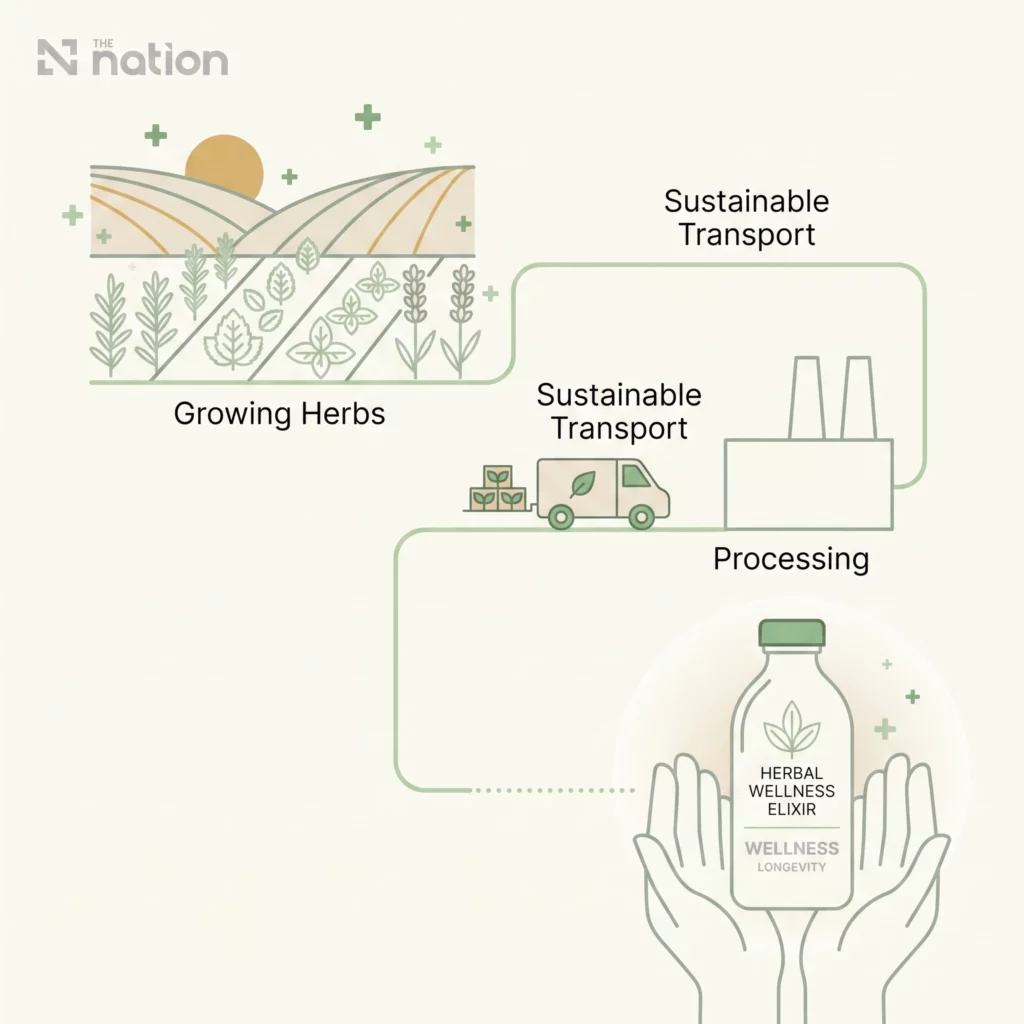
Thailand’s Trade Policy and Strategy Office (TPSO), has told the farming sector something plain. Stop selling by the sack.
Nantapong Chiralerspong, the director-general, says the money is no longer in the raw crop. It is in what the crop becomes after a laboratory has had a look at it.
I spent my working life in oil. The lesson is the same one. Crude coming out of the ground is worth what the market says it is worth on the day, and you have no say in it. Refine it, test it, put a specification on the barrel, and suddenly you are the one setting the price.
Turmeric in a sack is a commodity. Turmeric with a clinical study behind it is a product.
What the numbers actually say
Thailand’s herbal products retail market hit US$1.3575 billion in 2025. That is up 5.2% on the year before, and it puts the country 11th in the world. The projection is US$1.8364 billion by 2030.
The wider picture is bigger again. Thailand’s wellness economy was worth around US$43 billion in 2024, growing at close to 10% a year. That is 24th in the world by size, but seventh by speed.
And the region around it is enormous. The Asia-Pacific wellness market passed US$2 trillion in 2024, up 74% since 2019.
So the customers are already here. The question is who gets paid.
People want proof now, and they will pay for it
This is the part I find most interesting.
Euromonitor International found that more than half of fast-moving consumer goods sold online in 2025 lead with a health benefit. Not a taste claim. Not a price claim. A health claim.
And buyers said they would pay at least 20% more for something that has actually been tested.
That is a change. For a long time you could put a leaf on a label and call it wellness. That trick is running out. People have been burned enough times that they now want to know who tested it and what the test showed.
I am not an economist. But a market that starts demanding evidence is a market that starts rewarding whoever bothers to produce it.
The four things TPSO wants done
1. Medical-grade extracts. Put real research and clinical testing behind Thai herbs like gotu kola, turmeric and black ginger, so they meet standards the rest of the world recognises. Then sell the ingredient, not the plant.
2. Functional foods and personalised nutrition. Plant-based proteins. Rice-derived peptides. Everyday food that does a job. TPSO specifically points at people taking GLP-1 weight-loss drugs, who need to eat far less and therefore need what they do eat to count.
3. Technology attached to the product. Health analysis and AI built around what is being sold. TPSO notes that 52% of digital consumers now use generative AI to look up health questions. That is where people go first. Not the pharmacy. Not the doctor.
4. Tie it to wellness tourism. Thailand already brings people here for spas, treatments and longevity clinics. Send them home with the product, not just the memory.
Nantapong calls the whole thing “Agri-Wellness Synergy”. Strip the phrase back and it means one thing – a farm should not stop at growing food.
The bit nobody says out loud
None of this works without the boring part.
Research costs money. Clinical testing costs more money, takes years, and sometimes tells you the thing does not work. That is the risk, and it is a real one.
But the alternative is watching someone else buy your turmeric cheap, run the trial, print the certificate, and sell it back to your own tourists at ten times the price.
That is already happening. It has been happening for years.
Thailand has the plants, the growers and the visitors. What it has been missing is the paperwork that turns a crop into a product.
It is time to go and get the paperwork.